Remembering Erik Lindhult
|
Erik Lindhult A Eulogy 1
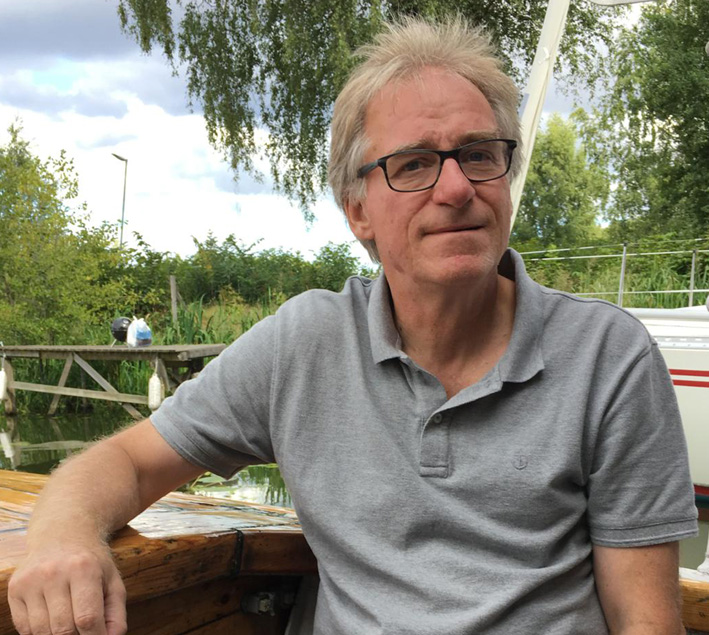
Having read many of the condolences written by neighbours, friends, colleagues, and students, there emerges the enormous human stature of this dearest of friends and colleagues. He was also very much appreciated by his colleagues at ALARA, as conveyed in the obituary written by Colin Bradley for his burial ceremony. I personally feel the passing away of Erik with an unabashed sense of deep grief. Our friendship and collaborative academic journey spans over four decades, and is traced in time to the Salzburg Seminar dealing with the Consequences of Technical Innovations on Social Relations. We benefitted at this encounter from the lessons and inspiration received from Einar Thorsrud, in the realms of socio-techniques and organizational development from a participatory democratic perspective, as well as from Berth Jönsson and his innovative approach to human relations and the social dimension of the Swedish enterprise, concerned with the quality of working life. With the passage of time, we befriended some of the most important thinkers associated with the construction of the Nordic Model of Democratic Organization and Social Welfare. Colleagues like Hans van Beinum and Rudolf Meidner, one of the key architects of the Swedish Popular Model, at the Swedish Center for the Study of Working Life (Arbetslivscentrum). The most important international research center for the study of working life, along with Instituto di Lavoro, both of them closed by the Swedish and Italian governments, respectively, in the early stages of neo-liberalism dominance in Europe. In terms of our collegial participation in scientific and academic organizations, Erik introduced me as a member to the Swedish Participatory Action-Research Community (SPARC), the Scandinavian Interactive Research Association (SIRA), and ALARA, while I introduced him to the International Sociological Association (ISA), RC10 and RC26. Erik invited me to teach part-time on the Latin American Contribution (mainly Orlando Fals-Borda and Paulo Freire) at the joint graduate program Mälardalen University-Eskilstuna and the Swedish Participatory Action-Research Community (SPARC) on Participatory Action-Research, from about 2016 until 2022, one of the best experiences I had as a teacher-researcher, interrupted by his illness and eventual sad passing away last year. Our experience as thesis supervisors at the master’s and doctoral programs was very enriching, because the subjects of research were extremely varied, well-beyond the conventional focus on education. It included themes such as health, theater, study-circles, innovations, organizational development, and so on. Based on this rich empirical experience, I decided to explore the application of PAR to shed light and hopefully help find solutions to the balkanized conflict and war triggered by the Hamas terrorist attack in Israel on 7 October 2023, regarded by the Guardia (29/9/2024) as the day that changed the world in our time. Erik Lindhult was born in Sala, 23 November 1956, and died 28 November 2023 in a hospital in Stockholm, at the young age of 67 years of age, the same age as my father when he died in Lima, Perú, my home country. In the evening prior to his death, Monica Gidmark, his widow, told me by WhatsApp, that Erik wanted to wave his hand at me. We both knew that it was his way to bid farewell. He published several books and numerous articles and papers, was revered by his students, while remaining an “academic activist.” In his doctoral thesis on industrial economy and management at KTH, the Royal Institute of Technology, was presented in 2005, on “Management by Freedom,” with his “essays in moving from Machiavellian manipulative approach - to Rousseauian democratic and dialogic approach to innovation and inquiry. He wrote in the abstract of his doctoral dissertation: “In managing innovation and development, a crucial issue is the participation of concerned people in order to attain efficiency, as well as consideration of the interests of those affected.” By way of closure, I just finished writing the article we had been working together for some years on “Dialogue as a Social Research Orientation, Method and Social Practice: Looking at Participatory Action-Research and Beyond,” presented at as PowerPoint at a joined session of RC-10 and RC-26 at the XX ISA World Congress of Sociology in Melbourne 2023. This article is to be published in a special issue of ALARA to honour the valuable contributions made by Erik to various disciplines, fields of study, Participatory Action-Research, Participatory Democracy, Social Innovations, Co-production of Scientific and Practitioner’s knowledge, and Knowledge-Democracy, one of his latest academic interests and research focus. I suggest for readers interested in Erik’s narrative of his own fascinating intellectual and academic journey, from the time he was a child in Rural Sweden, endowed with an enormous intellectual and human curiosity in rural Swede, who became an internationally known and respected scholar, to read the preface of this doctoral collected works (2005). It is also recommended to read his work on knowledge democracy in the book “Transformative Research and Higher Education,” (2022 pp. 107-128, Emerald). [1] This eulogy borrows from and elaborates the notes Azril Bacal wrote for the last issue of the RC-10 Newsletter of ISA Dr. Azril Bacal Roij
|